
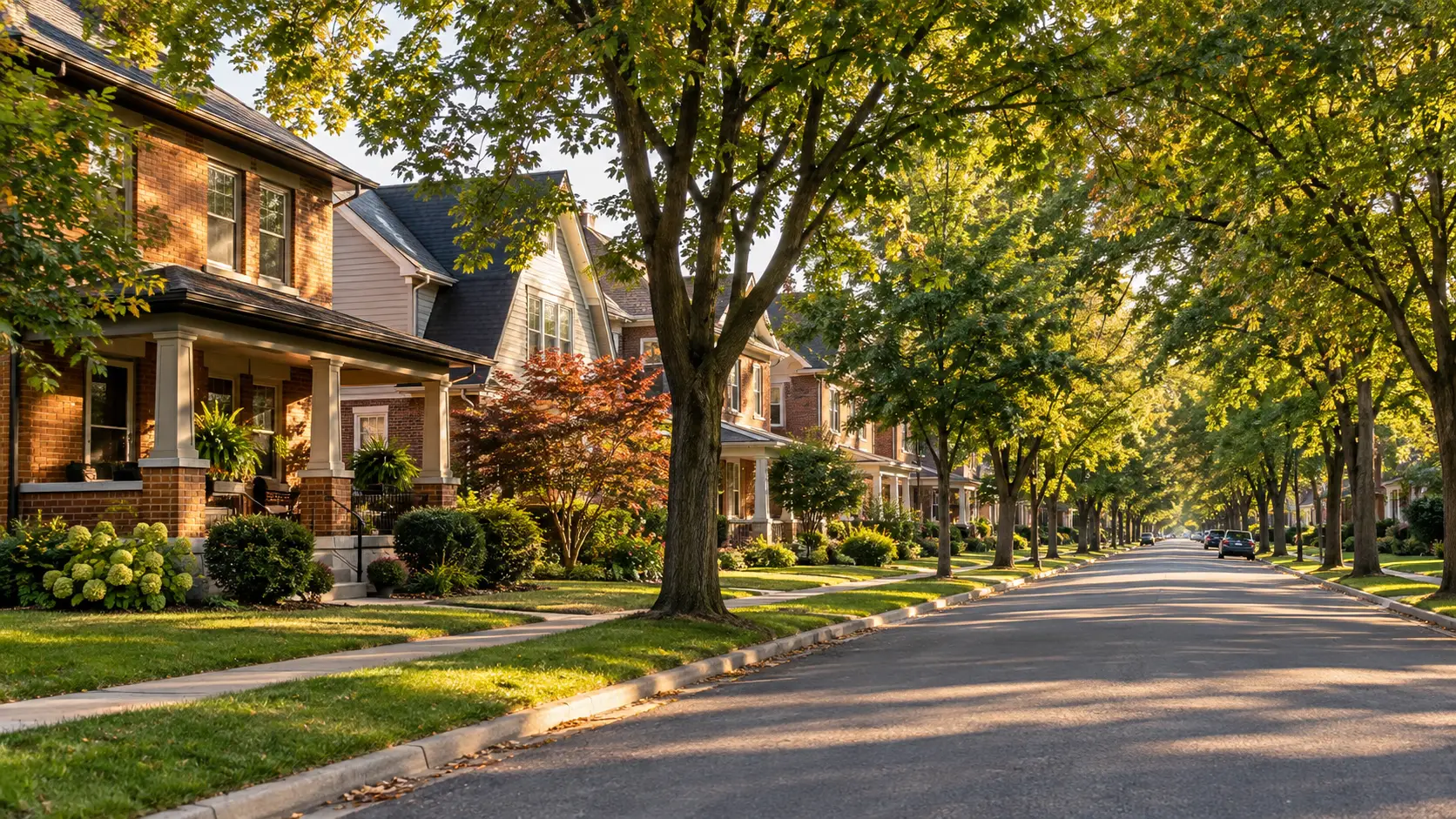
The best Grove City tour begins on Broadway in the historic Town Center, continues through the Beulah Park redevelopment, then moves south and west toward Hoover Road, Buckeye Parkway, Pinnacle, and the newer edges of the community. That route shows why Grove City cannot be reduced to “a suburb southwest of Columbus.” The traditional core offers local restaurants, shops, events, and older homes on a connected street grid. Beulah Park adds new housing and a major public gathering space on land once occupied by the racetrack. Farther out, established subdivisions, golf-oriented neighborhoods, parks, and newer construction create a more suburban pattern. Buyers have real choices here—the important part is matching the location to the life they expect to live.
Start With The Grove City Map
Grove City sits southwest of Columbus with access to Interstate 71, Interstate 270, and major local routes including Stringtown Road, London-Groveport Road, Hoover Road, Broadway, and Buckeye Parkway. That location can work well for trips toward downtown Columbus, the Rickenbacker area, the southwest side, and regional employers, but commute time varies considerably by starting point and time of day. Stringtown Road carries much of the area’s shopping and restaurant traffic, while Broadway leads into the historic core. Before choosing an area, drive your real commute, school route, grocery trip, and evening return—not simply the fastest route shown during a weekend tour.
Town Center And Beulah Park Offer A Different Experience
The Town Center around Broadway and Park Street is Grove City’s most recognizable local district. Its restaurants, shops, civic spaces, and events give residents a reason to visit beyond errands. Just north, the former Beulah Park racetrack has been transformed into a mixed residential district with new streets, housing, paths, and a large public park that preserves pieces of the site’s history. Together, these areas offer a more connected experience than the commercial corridor around Stringtown Road. Buyers can compare older homes and established blocks near the Town Center with apartments, attached homes, and newer construction around Beulah. Walkability, parking, event activity, and ongoing development should be judged from the exact address.
Housing Varies By Era, Lot, And Development Pattern
Closer to the Town Center, buyers may find older single-family homes, smaller lots, mature trees, and properties updated at very different levels. Postwar and late-twentieth-century neighborhoods add ranches, split-levels, two-story homes, and established subdivisions. Farther south and west, the inventory includes newer planned communities, attached housing, larger contemporary homes, and ongoing construction. Pinnacle is a recognizable golf-oriented area, while the Hoover Road and Buckeye Parkway corridors connect multiple subdivisions with different ages and amenities. Compare roof, windows, drainage, mechanical systems, renovation quality, lot grading, association rules, and future development—not simply square footage and finishes.
Parks And Trails Are Part Of Daily Life
Grove City’s outdoor options reflect the size and variety of the community. Gantz Park is known for its gardens, historic setting, and trails. Fryer Park combines recreation with the Century Village area and community programming. Windsor Park supports sports and inclusive play, while neighborhood parks and bikeways provide smaller everyday destinations. The Park at Beulah brings paths, play areas, pickleball, open lawn, and gathering space close to the Town Center. South of the city, Scioto Grove Metro Park adds wooded trails, river views, picnic areas, paddling access, archery, and backpacking sites. Buyers should visit the parks they expect to use; each offers a different experience, and access varies considerably across Grove City.
Daily Convenience Depends On Which Corridor You Use
Stringtown Road is the primary commercial corridor for many residents, with highway access, larger retailers, restaurants, and services. Broadway and the Town Center offer a smaller-scale local experience. Hoover Road, Orders Road, Buckeye Parkway, and London-Groveport Road connect residential areas with schools, parks, and shopping, but traffic and turn access can matter at busy times. A home described as “minutes from everything” may still require repeated driving for groceries, child care, recreation, or work. Build a realistic weekly map using the property address and the destinations you use most. That exercise often reveals whether you value quick highway access, Town Center proximity, trail connections, or a quieter edge-of-community location.
Verify The Municipality, Schools, Taxes, And Utilities
A Grove City postal address does not by itself confirm that a property is inside the City of Grove City. It also does not establish the assigned school, tax district, water or sewer provider, refuse service, or eligibility for city programs. Much of the area is served by South-Western City School District, but individual school assignments must be checked with the district using the exact address. Review the Franklin County parcel record, current tax bill, municipal boundary, utility information, and any association documents before making an offer. If new construction is involved, also ask about unfinished infrastructure, future phases, transfer fees, tax abatements or assessments, and what amenities are complete versus planned.
Use A Grove City-Specific Buying Or Selling Strategy
For buyers, the strongest comparison is between homes that share a similar location, construction era, lot pattern, school assignment, condition, and association structure. A renovated house near the Town Center should not be evaluated the same way as newer construction near the outer edge of the community. Inspect drainage and grading carefully, especially where lots or surrounding land have changed over time. For sellers, identify the property’s genuine advantage: Town Center access, Beulah Park proximity, highway convenience, a mature lot, recent systems, trail access, first-floor living, or a well-supported association. Price and marketing should explain that advantage with relevant comparable sales rather than broad claims about Grove City as a whole.
Planning A Move In Grove City?
Ryan Grover can help compare Grove City locations, verify property-specific details, and build a buying or selling plan around the home, neighborhood, and daily routes that matter to you.
Talk with RyanFrequently Asked Questions
Does every Grove City mailing address fall inside the city limits?
No. Postal addresses can extend beyond municipal boundaries. Verify the parcel’s municipality, tax district, utilities, services, and school assignment using official records for the exact address.
What parts of Grove City feel most walkable?
The Town Center and nearby Beulah Park area provide the strongest concentration of paths, events, restaurants, shops, and public gathering spaces. Walkability still varies by block, crossings, and the destinations important to you.
What should buyers inspect in an older Grove City home?
Review the roof, foundation, drainage, sewer or water service, electrical system, plumbing, HVAC, windows, insulation, additions, and permit history. The appropriate inspections depend on the property’s age and condition.
Where can I verify a Grove City school assignment?
Use South-Western City School District’s official boundary resources and confirm directly with the district for the specific property. Do not rely solely on a listing, postal city, or third-party real estate website.
Local resources: City of Grove City · The Park at Beulah · Town Center Park · Scioto Grove Metro Park · South-Western City School District boundaries · Franklin County property records



Join The Discussion