
A LOCAL AGENT’S GUIDE TO LIVING IN CLINTONVILLE
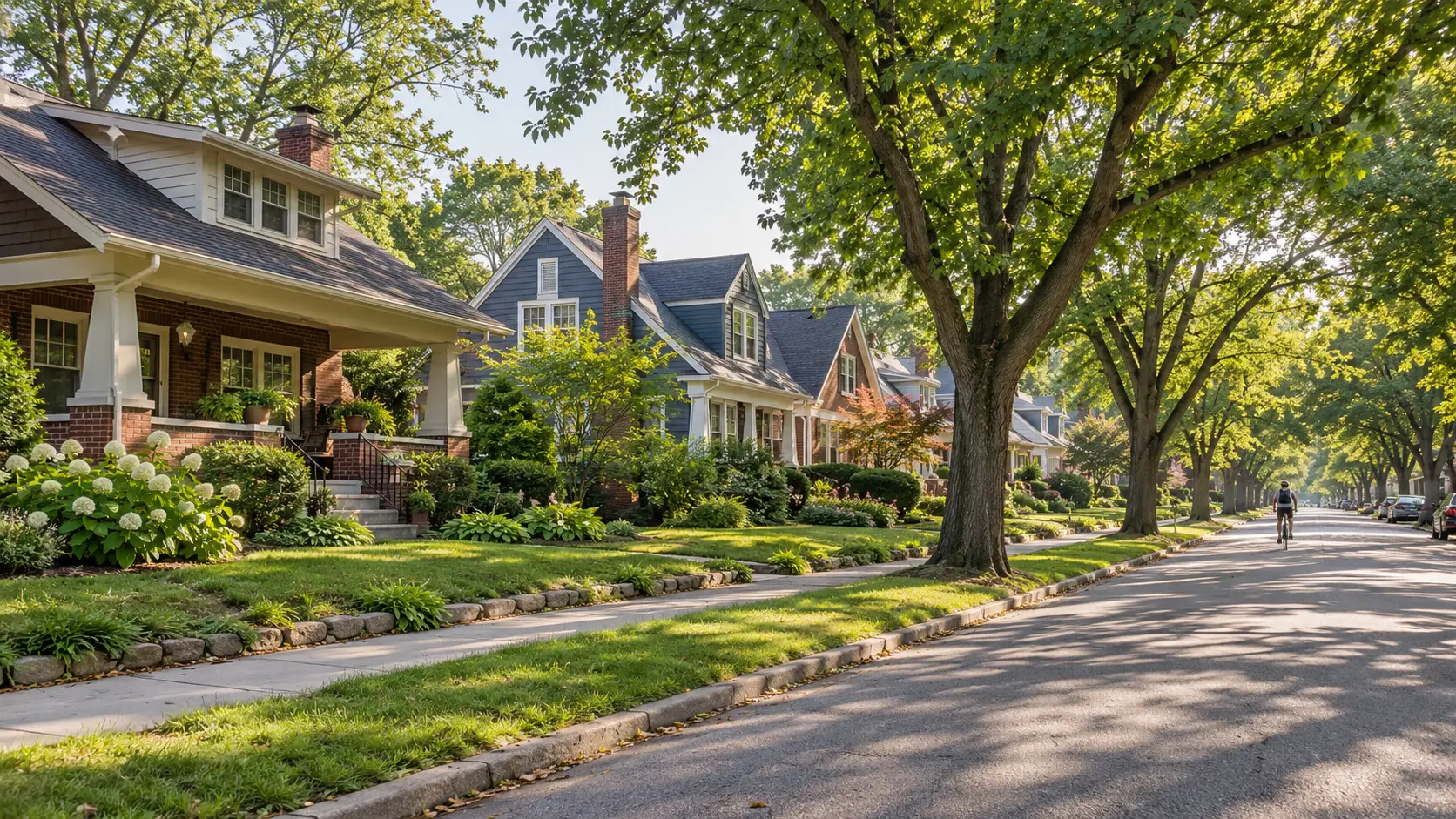
A useful Clintonville tour starts near Glen Echo, heads north along High Street, cuts west toward the Olentangy Trail and Whetstone Park, then winds through Northmoor, Beechwold, Old Beechwold, and the streets near Walhalla Ravine. That drive reveals why “Clintonville” is too broad to describe one housing experience. The southern blocks feel closer to Ohio State and central Columbus; the Whetstone area revolves around parks, the library, and recreation; Old Beechwold introduces stone gates, ravine topography, and distinctive early homes; and the northern neighborhoods transition toward Worthington. What ties the area together is a mature canopy, early- and mid-century housing, independent businesses, green space, and a location that keeps much of Columbus within easy reach.
Clintonville Changes From South To North
Clintonville changes in recognizable layers. Near Glen Echo and the University District, buyers find compact lots, older homes, duplexes, and quick access toward Ohio State. Around North Broadway and Whetstone, parks, the library, recreation, and High Street businesses become central to daily life. Northmoor is known for its curving streets and access toward the river corridor. Beechwold and Old Beechwold add larger trees, distinctive architecture, ravines, and streets that feel removed from the traffic only a few blocks away. East of High Street, Indianola Avenue and the railroad corridor shape access differently. These are not rigid real-estate boundaries, but they are useful local reference points when deciding which streets feel right.
High Street Is The Neighborhood’s Main Spine
High Street ties Clintonville together, but its commercial areas arrive in clusters rather than one continuous downtown. Restaurants, coffee shops, neighborhood services, vintage and specialty retailers, the farmers market, and long-running cultural destinations such as Studio 35 give residents reasons to stay local. North Broadway, Weber Road, Henderson Road, and Indianola Avenue create additional east-west and parallel routes. Living close to High Street can improve access to shops, buses, and dining, but it can also mean more traffic and less private parking. Buyers should walk from the exact property to the places they expect to use and notice the crossings, sidewalks, bus stops, and nighttime activity.
Whetstone Park And The Olentangy Trail Anchor Outdoor Life
Whetstone Park is one of Clintonville’s defining public spaces. It brings together the Columbus Park of Roses, athletic fields, paths, recreation facilities, the library, and access toward the Olentangy Trail. The trail provides a north-south route for walking and biking along the river corridor, connecting Clintonville toward Ohio State, downtown, Worthington, and other greenway destinations. Glen Echo Park and ravine add a very different natural setting on the south end, while neighborhood parks and tree-lined streets create smaller everyday options. If outdoor access matters, compare the route—not simply the straight-line distance. River crossings, elevation, major roads, and trail entrances can change how convenient a location feels.
The Housing Mix Is A Major Part Of The Appeal
Clintonville is known for early- and mid-twentieth-century housing: bungalows, Cape Cods, cottages, Tudors, Colonials, ranches, duplexes, and a smaller number of newer infill homes or condominiums. Original woodwork, built-ins, fireplaces, hardwood floors, and distinctive exterior details create character that is difficult to reproduce. Floor plans and renovation histories vary widely. One home may retain small original rooms; another may have a carefully designed addition or opened kitchen. Buyers should look beyond fresh finishes to the roof, sewer line, foundation, drainage, electrical service, plumbing, insulation, windows, and trees. Garages, driveways, alleys, and street parking also differ from block to block.
Ravines, Trees And Topography Create Character
Clintonville’s mature canopy and ravines are part of what makes the area memorable. Walhalla, Glen Echo, wooded pockets near the river, and the curved streets of Old Beechwold create landscapes that feel very different from a typical subdivision. Those features also deserve practical attention. Large trees can affect roofs, sewer lines, foundations, and maintenance. Sloped lots and ravine edges require careful drainage review. Homes near the river or lower ground should be evaluated with the exact parcel and conditions in mind. The goal is not to turn every natural feature into a warning; it is to understand the setting well enough to appreciate it and maintain it responsibly.
The Location Supports A Flexible Columbus Routine
Clintonville sits between the University District and Worthington, with direct routes toward Ohio State, downtown, Riverside Hospital, north Columbus, and the outerbelt. High Street carries local businesses and transit, while Indianola Avenue, North Broadway, Henderson Road, and Route 315 serve different travel patterns. The Olentangy Trail creates a valuable non-car connection for recreation and some commutes. Convenience still depends on the block. A home near High Street may make coffee and dinner easy to reach, while a quieter interior street may require more driving but offer less activity. Test the routine you actually expect to live.
Buying Or Selling Here Requires Block-Level Knowledge
For buyers, compare homes from the same part of Clintonville with similar age, lot, garage arrangement, condition, and proximity to High Street, parks, ravines, or the trail. A renovated bungalow near Glen Echo and a larger home near Whetstone serve different markets. Build inspection decisions around the property’s age and setting, and ask for permits and documentation for additions or major improvements. For sellers, the strongest story is specific: walkability to Whetstone, trail access, a preserved interior, a thoughtful renovation, a quiet Beechwold street, or convenient access to Ohio State. Clintonville’s name creates interest, but the block and the house close the sale.
Considering A Move To Clintonville?
Ryan Grover can help you compare Clintonville’s different pockets, understand older-home condition and renovation tradeoffs, and build a buying or selling strategy around the streets, parks, and routines that matter to you.
Talk with RyanFrequently Asked Questions
What areas are considered part of Clintonville?
The broader Clintonville planning area extends from the Glen Echo area north toward Worthington, generally between the Olentangy River and the railroad east of Indianola Avenue. It includes several distinct pockets rather than one uniform neighborhood.
What types of homes are common in Clintonville?
Buyers commonly find bungalows, Cape Cods, cottages, Tudors, Colonials, ranches, duplexes, and some newer infill or condominium options. Age, renovation quality, lot, garage, and floor plan vary widely.
Where are Clintonville’s best outdoor connections?
Whetstone Park, the Columbus Park of Roses, the Olentangy Trail, Glen Echo Park, and the neighborhood’s ravines and tree-lined streets are the major outdoor draws. Access depends on the exact block and crossing.
What should buyers inspect in an older Clintonville home?
Common priorities include the sewer line, drainage, foundation, roof, electrical service, plumbing, windows, insulation, additions, mature trees, and any work near ravines or sloped lots. Use the home’s age and condition to set the inspection scope.
Explore Clintonville: Clintonville districts and boundaries · Campus and Clintonville guide · Franklin County property records


Join The Discussion