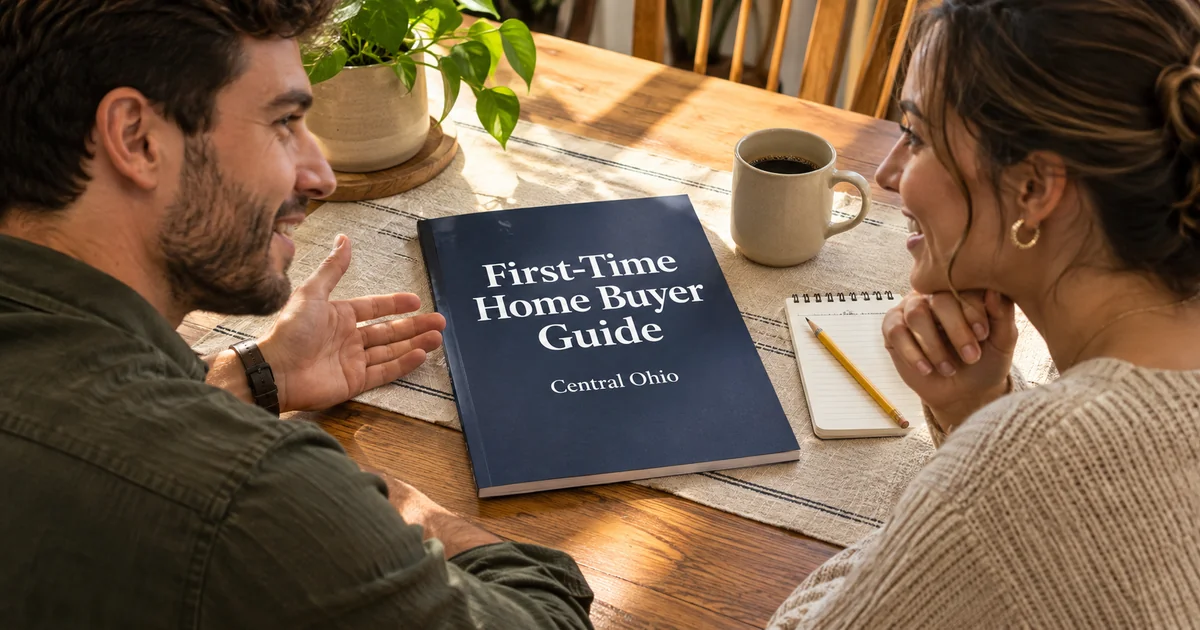
“I like this house. What would it actually cost me to buy it?”
If you’ve saved a listing around Columbus, bring it to me. Your lender can estimate the payment for that address, and I can help you check the costs that are easy to miss, from condo dues to a roof that’s nearly due for replacement. Here’s how I’d walk you through buying your first home, from that conversation to getting the keys.

1. Pick a payment that leaves room for the rest of your life
Look at what you pay in rent and what you’re able to save in an ordinary month. If a house payment would use up most of that savings, what would happen the first time the furnace needed work? Choose a monthly ceiling and a separate amount you want left in the bank after you move. Give both numbers to your lender.
Ask for a payment estimate on an actual listing. It should break out principal and interest, property taxes, homeowners insurance, and mortgage insurance if it applies. Add any association fee, then allow for utilities and maintenance. In Franklin County, you can look up a specific parcel and use the auditor’s tax estimator. That’s especially helpful with a new build where the prior bill may reflect vacant land. Franklin County Auditor’s property tools.
2. Get preapproved and ask what you’ll need in cash
A preapproval gives you a working price range after a lender reviews your finances. Final approval still depends on the property and an updated review of your file. Ask two lenders to price the same loan amount and down payment so you can compare the payment, fees, and cash you’d bring to closing. For most purchase mortgages, a lender must send a Loan Estimate within three business days of receiving the six pieces of information that make up your application, including the property address. How to read a Loan Estimate.
You can ask about options below 20% down. Have the lender show you what a smaller down payment does to both your monthly bill and the savings you’ll keep. If cash up front is the sticking point, ask an Ohio Housing Finance Agency participating lender to compare a loan with and without assistance. Check eligibility, the rate, the education requirement, and what you’d owe if you sold early. If you’re buying inside Columbus city limits, also ask whether the city’s American Dream Downpayment Initiative is accepting applications for your purchase. Ohio down payment assistance · City of Columbus housing programs.
When does the money actually leave my account?
Once you’re in contract. Your offer spells out the earnest money deposit, who holds it, and when it’s due. At closing, that deposit counts toward what you owe. If the deal ends early, the contract terms and deadlines matter to whether you get it back.
During inspections and loan processing. Ask the inspector when their fee is due and the lender when it collects the appraisal fee. You may pay for these before closing, including on a house you ultimately don’t buy.
What you’d bring to closing on a $300,000 home
| Down payment at 5% | $15,000 |
|---|---|
| Remaining closing costs and prepaid expenses | + $7,000 |
| Earnest money already deposited | − $2,000 |
| Cash still due at closing | $20,000 |
You’ve paid $22,000 across the deposit and closing. Budget separately for moving and any inspection you paid for up front. Your lender’s estimate will give you the figures for your purchase.
3. Choose your agent and make your first tours count
Before I take you on a private tour, we’ll review a written buyer agreement. Ask which homes and dates it covers, what I’ll do for you, how either of us can end it, and how I’m paid. Compensation is negotiable. We’ll talk through what you could owe if the seller pays only part of the agreed amount. You can visit a public open house on your own without signing a buyer agreement just to walk through. Open houses and written buyer agreements.
Pick two or three homes you could genuinely buy. Take the drive you’d make on a workday. Open the garage and picture your car, the bikes, and the trash bins in it. On an east-side search, two Blacklick listings can share a ZIP code and fall in different school districts. If the district matters to your decision, confirm the parcel and enrollment information before writing an offer. Explore Central Ohio communities.
If a builder’s model home is on your list, call me before your first visit or online registration. Builders set their own rules for registering an agent. We can check those rules and arrange to go together.
4. Write an offer you’ll feel good about the next morning
When you find the one, I’ll show you recent closed sales and the homes a buyer could choose instead. We’ll look for differences that actually affect your offer. A finished basement can be valuable, for example, but I’d want to know how much of each home’s listed space is above ground before treating them as the same size.
Choose your walk-away price while you still have time to think. Then we’ll talk about the deposit, inspections, financing, the appraisal, any seller-paid costs, and when each side wants to move. A seller who needs an extra weekend may care about possession as much as price. If you need a seller credit to make closing work, have your lender check how much your loan allows before we put it in writing.
Ask me to point to the exact dates and protections in the offer. If the appraisal comes in below the price, your lender can recalculate the loan. Before you promise extra cash, look at the revised amount due, whether the seller will adjust the price, and what your contract lets you do by the deadline.
5. Use the inspection period to answer the expensive questions
An inspector helps you understand the home’s condition. An appraiser gives the lender an opinion of value. You can have a house that appraises at the purchase price and still needs a roof.
After acceptance, put the deposit, inspection, financing, and closing deadlines on one calendar. Schedule the inspection promptly and attend if you can. A photo of staining on a basement wall is more useful when the inspector can show you where the water may be entering. If a concern could change your decision, get the right specialist or contractor involved while you still have time under the contract.
In an older Columbus neighborhood, you might ask about a sewer scope if the condition of the line is unclear. For a property farther out with a well or septic system, find out what records and inspections are available. If you’re buying a condo, review the association budget, reserves, meeting minutes, and any planned assessments. The monthly dues alone won’t tell you whether a major project is coming.
6. From loan approval to the keys
While the lender finishes its review, the title company checks ownership and prepares the closing. Get an insurance quote for the specific house, answer the lender’s document requests, and call before financing furniture or changing jobs. Either can affect the numbers your approval was based on.
For most purchase mortgages, you must receive your Closing Disclosure at least three business days before closing. Compare the loan terms and cash to close with your latest Loan Estimate. Check that your deposit and any agreed seller credit appear. Before wiring money, call the title company using a number you’ve independently verified. Treat a last-minute email changing the wiring instructions as a reason to stop and call. Review your closing documents.
At the final walkthrough, check the home’s condition, the items the seller agreed to leave, and any agreed repairs. Then confirm the handoff in writing. Signing day and key day can be different. Before you book the movers or give up your apartment, check the possession date and time in your contract.
A few questions worth asking early
My lease ends this summer. When should I start?
Start with the date your landlord needs notice, which can be weeks before your lease actually ends. Work backward from there. We can allow time for financing, the search, closing, and a little overlap to move. If you haven’t found a house by your notice deadline, find out what a short extension would cost. That number can take pressure off the next offer.
What if the lender approves me for more than I want to spend?
Give me the lower number. We can build your search around the payment you chose and ask the lender for a fresh estimate on any house you’re serious about. You get to decide what feels comfortable after groceries, savings, and everything else you want your paycheck to cover.
What should I bring to a first conversation?
Three things are enough: the monthly payment you’d feel good about, the cash you want to keep after closing, and any date you need to move by. If you’ve saved a listing, bring that too. It gives us a real house to talk about and an easy place to begin.
I’m Ryan Grover with The Grover Group at CENTURY 21 Excellence Realty. I’ve been licensed in Ohio since 2005. If you’re starting your search around Columbus, get in touch with me or explore our Central Ohio Buyer Guide.