
A LOCAL AGENT’S GUIDE TO LIVING IN UPPER ARLINGTON
Upper Arlington is easiest to understand by driving it in layers. Start south of Lane Avenue among the older homes, narrow streets, stone walls, and mature trees of Old Arlington. Continue through the Mallway, then north toward Northam Park, the library, Tremont Center, Kingsdale, and the larger postwar neighborhoods that reach toward Henderson Road and the Scioto River. That short tour reveals why the city cannot be reduced to a single description. South of Lane often delivers architectural character and a closer-in setting; central Upper Arlington puts parks, schools, civic spaces, and everyday shopping near the center of life; northern sections generally offer more mid-century and later homes, different lot patterns, and easier access to northwest Columbus. The right choice depends on the house, the block, and the routine you want.
South of Lane and Old Arlington Set the Historic Tone
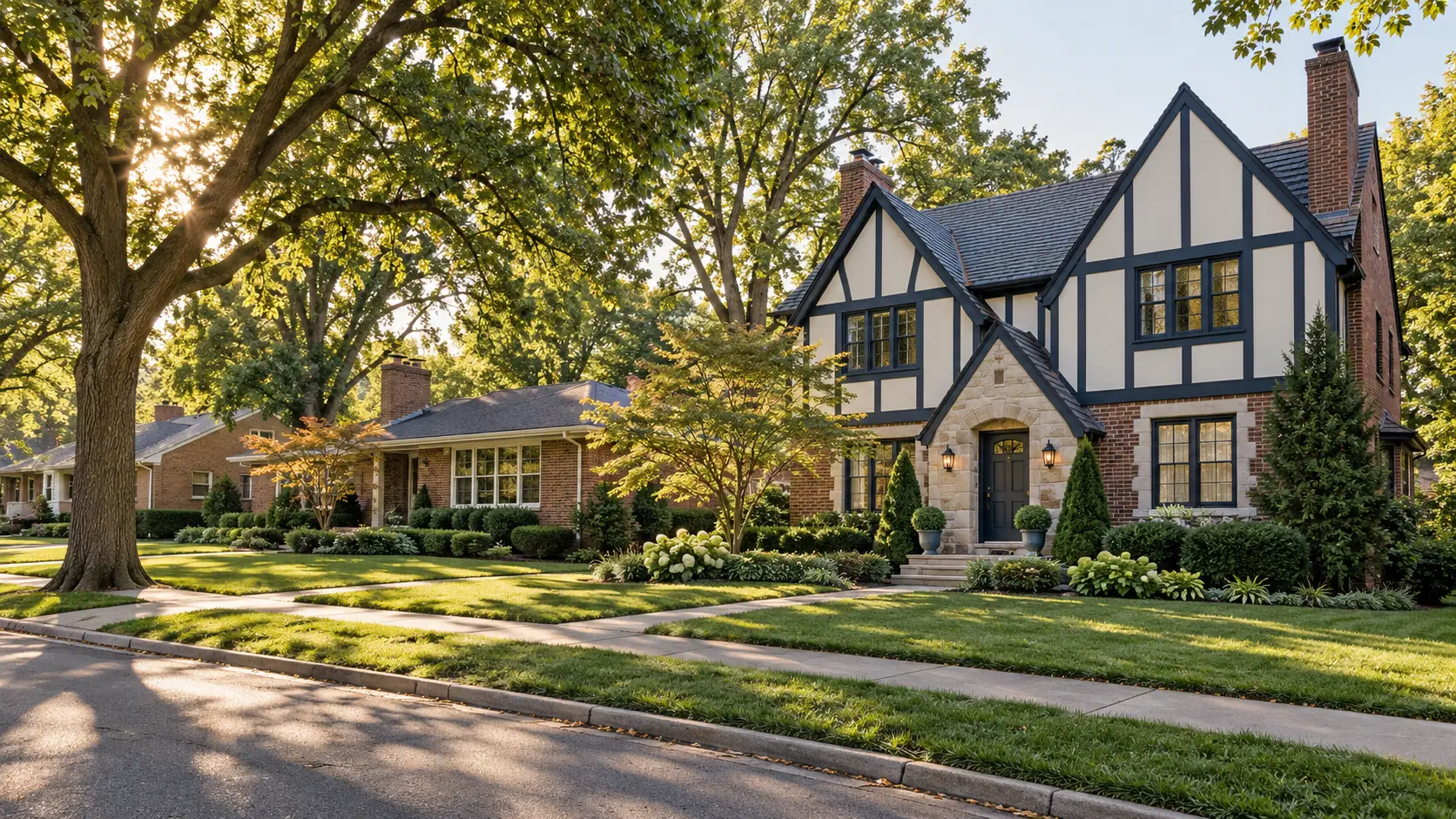
The streets south of Lane Avenue contain much of the architecture people picture when they think of Upper Arlington: early twentieth-century Tudors, Colonials, cottages, substantial brick homes, slate roofs, original woodwork, and carefully layered additions. Old Arlington’s historic district is especially distinctive, with curving streets, stone features, mature landscaping, and homes designed before modern subdivision standards. That character comes with practical differences. Garages may be smaller, driveways narrower, floor plans more compartmentalized, and renovation histories more complex. Buyers should compare homes from the same pocket and era rather than applying a broad citywide price-per-square-foot number. A well-executed addition, updated systems, preserved materials, and a strong lot can separate two apparently similar properties.
The Mallway And Lane Avenue Create Two Different Centers
Upper Arlington has several commercial nodes rather than one traditional downtown. The Mallway at Arlington Avenue and Mallway Drive is the historic neighborhood center, with small businesses, civic landmarks, and a scale that feels integrated into the surrounding streets. Lane Avenue is busier and more regional, linking shops, restaurants, Ohio State, Route 315, and the neighborhoods on both sides of the corridor. Kingsdale and Tremont Center serve daily errands farther north and west. Each location creates a different pattern of convenience, traffic, and walkability. A home near the Mallway may place coffee or dinner within an easy walk; a property near Lane Avenue can shorten trips toward campus and downtown; a northern address may make grocery runs and outerbelt access simpler. Test the exact route rather than relying on a neighborhood label.
Parks And Civic Spaces Shape Everyday Life
Northam Park is one of Upper Arlington’s everyday anchors, bringing together fields, courts, paths, green space, the Tremont library, and nearby community facilities. Thompson Park offers a different experience with wooded edges, open fields, sports facilities, and neighborhood access. Fancyburg Park, Reed Road Park, Devon Pool, neighborhood playgrounds, and smaller green spaces spread recreation across the city. The location of these amenities matters because Upper Arlington’s street network and major corridors can make a nearby destination feel easier or harder to reach than the map suggests. Walk the route from a prospective home, notice sidewalks and crossings, and consider how the park will fit the week—not just whether it appears in the listing description.
Housing Changes Noticeably From South To North
Upper Arlington’s housing stock reflects more than a century of growth. South of Lane is associated with many of the city’s oldest and most architecturally distinctive properties. Central neighborhoods introduce a broad mix of Colonials, Cape Cods, cottages, and mid-century homes near Northam Park, Tremont, and Lane Avenue. Farther north, ranches, split-levels, larger two-story homes, condominiums, and later redevelopment become more common. Teardowns and major additions have also changed some blocks, creating sharper differences in scale and price. Buyers should compare lot width, finished space, garage configuration, renovation quality, tree canopy, drainage, and the relationship between the home and neighboring properties. The city name establishes demand; these property-level details establish value.
The Location Works Especially Well For Central Columbus
Upper Arlington sits immediately northwest of Ohio State and a short drive from downtown, Grandview Heights, Riverside Methodist Hospital, Dublin, and the employment corridors along Route 315 and the outerbelt. Lane Avenue, Northwest Boulevard, Tremont Road, Reed Road, Fishinger Road, and Henderson Road serve different sections of the city, and the best route changes by time of day. Proximity to campus is useful for many residents, but football games, major events, and rush-hour traffic can affect the southern streets. Northern Upper Arlington may trade some of that central feel for easier access toward northwest Columbus. Drive the commute, school route, grocery trip, and weekend routine from the specific address; convenience here is highly block- and corridor-dependent.
Older Homes Deserve An Architecture-Aware Inspection
In an older Upper Arlington home, fresh finishes are only the beginning of the evaluation. Review the roof—especially slate or other specialty materials—along with masonry, foundation, grading, drainage, sewer line, electrical service, plumbing, windows, insulation, HVAC, fireplaces, and additions. Mature trees are a major visual asset, but they also affect roofs, roots, sewer lines, and ongoing maintenance. Ask for permits and documentation when walls have moved, kitchens have expanded, or upper floors and rear additions have been created. On newer or extensively rebuilt properties, study how the home fits the lot and whether drainage, privacy, and outdoor space were handled well. Character is valuable when the systems and workmanship support it.
Buying Or Selling Requires A Block-Level Comparison
For buyers, the most useful comparison set is narrow: similar part of Upper Arlington, similar housing era, lot pattern, finished space, garage arrangement, renovation quality, and proximity to parks or commercial corridors. A restored Tudor south of Lane, a mid-century home near Northam Park, and a newer build north of Fishinger may appeal to different buyers even at a similar price. For sellers, document the improvements that protect both beauty and function—roof, masonry, drainage, windows, electrical, mechanical systems, additions, and landscape work. Then connect the home to its actual advantages: a Mallway walk, Northam Park access, an easy Route 315 commute, a quiet interior street, or a flexible floor plan. Specificity is what turns “Upper Arlington” into a persuasive property story.
Considering A Move To Upper Arlington?
Ryan Grover can help you compare Upper Arlington’s different pockets, understand the renovation and inspection issues that come with its housing stock, and build a buying or selling strategy around the specific block and property.
Talk with RyanFrequently Asked Questions
What is the difference between South of Lane and northern Upper Arlington?
South of Lane includes many of the city’s oldest homes and most distinctive architecture in a closer-in setting. Northern sections generally contain more mid-century and later housing, different lot patterns, and convenient access toward northwest Columbus. Individual streets and homes still vary.
What areas of Upper Arlington feel most walkable?
Homes near the Mallway, Lane Avenue, Northam Park, Tremont Center, and Kingsdale may offer the strongest access to shops, parks, libraries, or restaurants. Walkability depends on the exact street, sidewalk network, and crossings.
What should buyers inspect in an older Upper Arlington home?
Common priorities include roof materials, masonry, drainage, foundation, sewer line, electrical service, plumbing, windows, insulation, HVAC, fireplaces, mature trees, and the permits and workmanship behind additions or major renovations.
Is every Upper Arlington address the same for schools and taxes?
Do not assume that a mailing address proves municipal, school-district, or tax boundaries. Verify the exact parcel through official city, school, and county records before purchasing.
Explore Upper Arlington: Upper Arlington parks and playgrounds · Old Arlington Historic District · The Mallway · Franklin County property records

Join The Discussion